Showing posts with label holistic. Show all posts

Friday, 1 September 2017

Spring Sale

http://www.aromaticboutique.com.au

Welcome to the first day of Spring!

 To celebrate the start of my favourite time of year I am having a store wide sale. 
Use the coupon code at checkout : SPRING17 to receive 15% off your order. 

Expires : Monday 11th September 2017

View all the latest products here:
 
https://www.aromatherapyforaustralia.com.au/shop/index.php?route=product/latest

Tuesday, 30 August 2016

Handmade Products Giveaway!

https://www.facebook.com/aromatherapyaustralia/photos/a.297085480391294.53426.296436877122821/866129523486884/?type=3&theater
GIVEAWAY TIME!


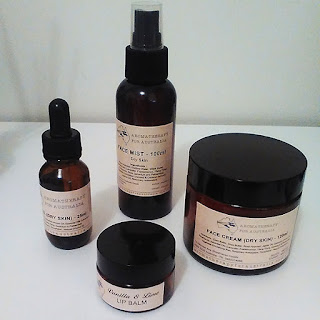
To celebrate the release of my handmade products line I am giving away prizes to 3 lucky winners.  The winners can choose any prize from our handmade category.

TO ENTER:

  •   LIKE this Facebook post
  • COMMENT on this Facebook post - Please tell me the product you would most like to win from the 'Handmade' Category. You will need to go to our site and copy the link of the product in the comments section from our 'handmade' category. Alternatively you can screen shot an image of the product page with your smart phone and post it in the comments.
  • LIKE our Facebook page so you can be notified of who the winner is.

Here is the link to the handmade category to choose the prize you would to win:
<< CLICK HERE>>


Please Note : That when many people are on the site at once that it can have sometimes a few issues. Hoping it won't happen but if it does please come back and try later.

Competition will be drawn on Sunday 25th September around 8pm.

Prize is not for resale.


This promotion is in no way sponsored, endorsed or administered by, or associated with, Facebook.
ENTER HERE VIA MY FACEBOOK PAGE-


http://www.aromatherapyforaustralia.com.au/shop/index.php?route=product/category&path=234

Thursday, 4 August 2016

Essential Oil Spotlight : Ylang Ylang


YLANG YLANG ESSENTIAL OIL


Family
Name:
Annonaceae

Common Name: Ylang Ylang

Botanical Name:
 
Cananga odorata
 
Extraction method: Water or steam distillation of the freshly picked flowers.


Odour:
  'A pale yellow oil with a powerful floral and intensely sweet odour'.

General Description: 
Ylang Ylang is a tropical evergreen tree, reaching a height of twenty metres, with large, shiny ovate leaves and long, narrow, downy flowers that turn from pale green to deep yellow as they mature. It is the freshly picked flowers that contain the essential oil. 

Indigenous to Southeast Asia, most of the world's ylang ylang oil is produced in the Comoro Islands, Madagascar, and Reunion. In terms of fragrance quality, there are as many as five grades of ylang ylang, with "Ylang Ylang Extra Superior" being the highest and most expensive. Essential oil of 'cananga', the macrophylla variety of Cananga odorata, is sometimes sold as ylang ylang (var. genuine), but is harsher and less subtle, though lower in cost.

History/Folk lore: 
The name ylang ylang comes from the Philippine alang-ilang, referring to the flowers that 'hang' or 'flutter' in the breeze. The islanders would pick the flowers and immerse them in coconut oil, producing a pomade called boori-boori. This they used as a body rub to prevent fevers and infections, especially in the rainy season, and to nourish and rejuvenate the skin. The Indonesians on the other hand, spread the luxuriant flowers on the marriage bed of newly wedded couples. 

Ylang Ylang oil has long been one of the most important raw materials within perfumery, its exotic spicy sweetness imparting floral top notes to an otherwise dull and flat composition. Some of the masterpieces of French perfumery have relied on the skillful blending of Ylang ylang, rose, bergamot and vanilla. Ylang ylang's medicinal properties were first recognized at the beginning of the 20th century by the French chemists Garnier and Rechler. Conducting research on the island of Reunion, they discovered the oil to be effective against malaria, typhus, and infections of the intestinal tract. They also noted its calming action on the heart. 

Main Uses In Massage: 
  Ylang ylang oil is one of those oils that people either love or hate.

It can be used in relaxation massage for its calming, soothing effects, or given in take-home blends to clients who have insomnia or who find it difficult to relax in the evenings.
 
Therapeutic Properties or Actions: 
Anti-depressant, antiseptic, hypotensive, sedative.

Body Systems & Therapeutic Uses: 

 Skin Care - Beneficial in softening and balancing the moisture in the skin. Recommended in hair care to treat split ends. Recommended for dry and oily skin, and reputed to have a balancing effect on sebum production.

Nervous systemKnown for its ability to slow down over-rapid breathing and over-rapid heart beat. Renowned as an antidepressant and particularly beneficial for treating feelings of anger, rage and frustration.
Circulatory system - Recommended for treating palpitations and reducing high blood pressure.

Mind - Resolves emotions such as anger, anxiety, shock, panic, fear, impatience Creates a feeling of 'peace'. Soothing and sensual. It instils a feeling of warmth and togetherness.
 
Precautions:
None at usual doses. Excessive use may cause headaches or nausea.
http://www.aromatherapyforaustralia.com.au/shop/index.php?route=product/search&search=ylang

I will be posting more information about other essential oils on this blog so keep checking back. 

< Related articles - lemon , peppermint , rosemary , tea tree & thyme >

Information on this page is for educational purposes only and should not replace advice from a medical practitioner.  
© Graphics are property of Aromatherapy For Australia. Please do not use images without permission or without credit or link back to this blog post. Please read our Terms & Conditions

Tuesday, 2 August 2016

Essential Oil Spotlight : Thyme


THYME ESSENTIAL OIL

  
Family Name: Lamiaceae

Common Name: Thyme

Botanical Name:
 
Thymus vulgaris.
 
Extraction method: Steam distillation of the dried or partially dried leaves and flowering tops.


Odour: 
'Intense warm herbaceous odour, distinctly aromatic'

General Description:
Thyme is a hardy perennial sub-shrub, growing to a height of 10 to 40 centimetres, with hairy, pointed grey-green leaves and small, white-to-lilac flowers. Indigenous to the Mediterranean region of Europe, thyme today grows in temperate regions throughout the world. Spain is the largest producer of the essential oil. 

There are more than 300 different varieties of thyme, including garden, or common thyme (Thymus vulgaris), the less strongly aromatic wild or mother of thyme (Thymus serpyllum), and lemon thyme (Thymus limonum), which has a distinct lemony scent. 

There are six different chemotypes of Thymus vulgaris - the two most common ones are located close to the Mediterranean Sea, at a low altitude: the thymol type and the carvacrol type.

History/Folk lore: 
It is believed that thyme was used by the Ancient Sumerians some 3,500 years ago, most likely burnt as an aromatic fumigant. Calling it tham, the Ancient Egyptians employed it in the embalming process, while the Greeks made use of thyme as a culinary herb. They also used it to disinfect the air and so prevent the spread of disease. 
 
The Roman soldiers bathed in a bath infused with the herb before entering battle, and in the Middle Ages sprigs of thyme were woven into the scarves of knights departing for the Crusades. In the Middle Ages, St Hildegarde of Bingen prescribed thyme for plague and paralysis, leprosy and body lice. Thyme was a strewing herb in Britain and was included in posies carried by judges and kings to protect them from disease in public. 
 
Thyme oil is used in the food, perfumery and pharmaceutical industries. The strong antimicrobial activity of thyme oil is ascribed mainly to the high content of phenolic constituents. 
 
'Thyme was used, along with clove, lemon and chamomile essential oils, as a disinfectant and antiseptic in hospitals until the First World War, as it could kill yellow fever organisms and was seven times stronger than carbolic acid. It was sprayed onto the clothes of soldiers during the Crimean War to protect against disease and lice.' 

Main Uses In Massage:
 
  The antioxidant property of thyme oil can be utilised to prevent a number of pathological disorders such as atherosclerosis, cancer, inflammation and rheumatoid arthritis.

Thyme oil is recommended for all infections. It stimulates the production of white blood corpuscles to strengthen the immune system. 

Thymus vulgaris ct. linalool is recommended for skin infections as it is non-irritating.
 
Therapeutic Properties or Actions: 
Anti-rheumatic, antiseptic, antispasmodic, bactericide, carminative, cicatrisant, diuretic, expectorant, hypertensive, insecticide, stimulant, tonic, vermifuge.

Body Systems & Therapeutic Uses: 

 Respiratory system - May be used for any cold condition involving weakness, congestion and/or infection of the lungs. Will benefit catarrhal coughs and bronchitis, especially when there is copious, clear or white catarrh.

Digestive systemA digestive stimulant and a carminative. Promotes appetite, eases abdominal distension and relieves flatulence.
 Immune system - Recommended for all infections — an excellent immunostimulant, particularly where there have been repeated infectious pathologies.

Musculo/skeletal - Used to ease gout, rheumatic pain and arthritis and sporting injuries.
Antiseptic - Powerful antiseptic for internal and external uses; extensively used to medicate gauze and wool for surgical dressings. Resembles carbolic acid in its action, but it is less irritating to wounds and its germicidal action is greater. 
 
Precautions:
Non-toxic, non-irritating and a possible sensitiser in some individuals.
http://www.aromatherapyforaustralia.com.au/shop/index.php?route=product/search&search=thyme

I will be posting more information about other essential oils on this blog so keep checking back.

< Related articles - lavender , lemon , peppermint , rosemary & tea tree >

Information on this page is for educational purposes only and should not replace advice from a medical practitioner.  
© Graphics are property of Aromatherapy For Australia. Please do not use images without permission or without credit or link back to this blog post. Please read our Terms & Conditions

 
01 09 10